
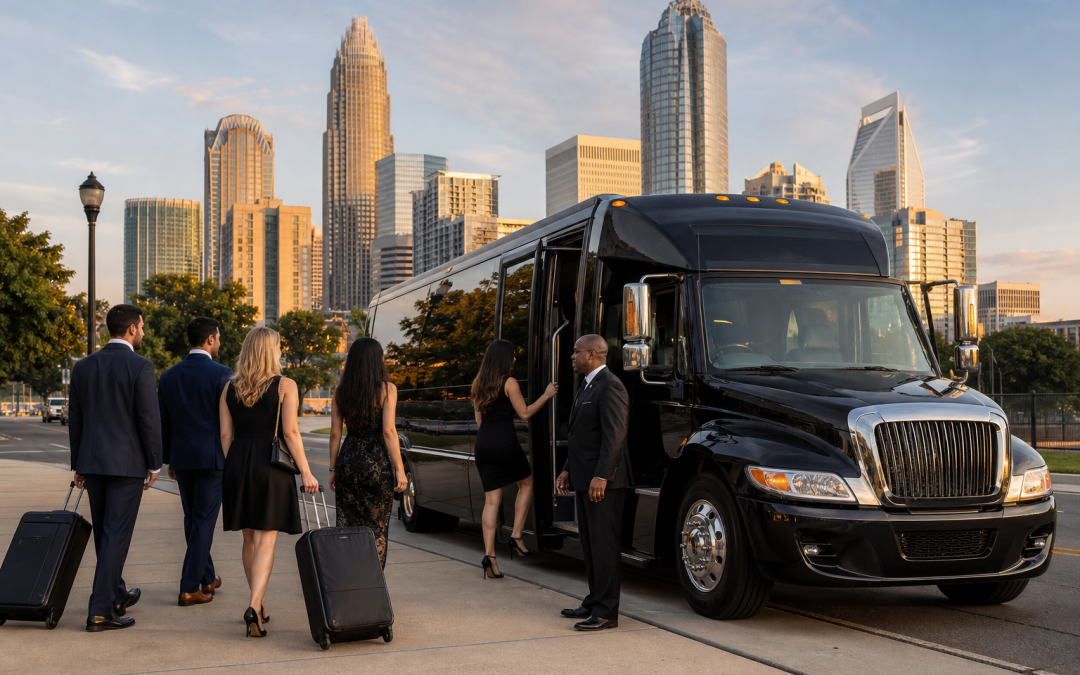
Booking a group party bus Charlotte NC requires more than picking a size and a price. For business travel planners, wedding coordinators, bachelor/bachelorette organizers and airport groups in the Charlotte metro, safety and vehicle condition directly affect your schedule and everyone’s well-being. This guide lists the precise questions to ask providers so you can make a confident, informed choice and reduce operational risk for your group.
Why you should ask specific safety and maintenance questions
Chauffeured party buses combine hospitality with commercial transportation. Unlike a personal car, a party bus operates under commercial-use demands: frequent trips, many passengers boarding and exiting, and higher wear on systems. Asking targeted questions helps you verify a provider’s professionalism, confirm regulatory compliance where applicable and reduce the risk of last-minute cancellations or safety incidents.
As an event planner or corporate logistics lead, you’re protecting schedules, reputations and potentially client safety—so use these questions to separate established operators from informal or ad-hoc vendors.
Essential questions about the driver and company practices
1. What qualifications and training do your chauffeurs have?
Ask about driver licensing, ongoing safety training, and experience specific to operating large passenger vehicles. Depending on vehicle size and local requirements, chauffeurs may need additional endorsements or commercial credentials—reputable companies will explain which apply to their fleet. Also ask whether drivers receive repeat training on defensive driving, passenger de-escalation, and airport/venue procedures.
Example: for airport runs, a driver experienced with Charlotte Douglas International Airport (CLT) procedures can reduce pickup time and avoid unnecessary fees; for stadium events, an experienced driver will plan routes to avoid event ingress/egress bottlenecks.
2. Do you perform background checks and drug/alcohol testing on drivers?
For any group, especially corporate or celebratory events, confirm that drivers undergo criminal background checks and are subject to a drug and alcohol policy. Ask how recent checks are renewed (annually, biannually) and whether random testing occurs. This reduces safety risk and liability for the group organizer.
3. What is your on-call support and replacement-driver policy?
Ask how the company handles last-minute driver illness or schedule changes. Reliable providers have contingency plans and communicate substitutions early to avoid disruptions. Specifics to request: how soon a replacement is available, whether the replacement meets the same qualification standards, and if there is an escalation contact available day-of.
Questions about vehicle condition, inspections and maintenance
4. How often are vehicles inspected and where are the records kept?
Request information on routine inspections (pre-trip checks, scheduled maintenance intervals) and where you can see records or certificates. Regular documented inspections demonstrate a maintenance culture rather than ad-hoc repairs. Ask whether inspections follow manufacturer recommendations or a company-specific preventive schedule.
Tip: ask to see the most recent pre-trip checklist for the vehicle you will use, or a redacted maintenance summary if full records contain sensitive information.
5. Are maintenance logs and repair invoices available on request?
Transparent companies can summarize recent major maintenance items (brakes, tires, suspension work, HVAC repairs) and frequency of preventive service. You don’t need every invoice, but access to records upon request is a useful indicator of accountability. For recurring clients, consider requesting updated summaries before peak seasons or major events.
6. How do you monitor and manage tire, brake and lighting condition?
Tires, brakes and lights are the most common safety-critical items. Ask whether the company performs visual pre-trip checks and follows specific replacement criteria (tread depth, brake-pad thickness, warning-light diagnostics). Ask how quickly a vehicle is pulled from service if a safety defect is found and whether technicians perform work in-house or use certified shops.
Decision guidance: prioritize vendors that use written thresholds for replacement (e.g., a measured tread-depth policy) rather than purely visual judgment—this reduces subjectivity and risk.
On-board safety equipment and accessibility
7. What safety equipment is carried on the vehicle?
Confirm the presence and condition of fire extinguishers, first-aid kits, emergency exit markings, and interior lighting for night events. For larger groups consider asking about on-board communication systems (two-way radios or a company dispatch system). Also ask whether safety gear is checked daily and replaced after use.
8. Are seat belts available for all seating positions?
Ask whether seat belts are installed at each passenger seat and whether their use is enforced by the chauffeur. For some group party bus configurations seat belts may be limited or differently arranged—get clarity so you can communicate expectations to attendees. If children will be aboard, discuss child-restraint options and whether the vendor can provide or install appropriate seats per North Carolina law.
9. Is the bus accessible for guests with mobility needs?
If you have passengers who need ramps or lift access, confirm the vehicle’s accessibility features and whether staff are trained to assist. Even if your standard bus isn’t wheelchair-accessible, an experienced provider can often offer an alternative vehicle or coordinate multi-vehicle solutions to keep your group together.
Operational and policy questions that affect safety and comfort
10. What is your maximum passenger capacity and do you enforce it?
Overloading a vehicle compromises safety and comfort. Confirm the legal passenger capacity for the specific vehicle you will use and that the company enforces it consistently. Ask how they handle last-minute guest increases—will they break the group into multiple vehicles or refuse additions?
11. Do you have an alcohol policy and how is it enforced?
If your event will include alcohol, ask about the provider’s policy on open containers, intoxicated passengers, and whether they allow outside alcohol. Clear rules and an enforcement plan help avoid unsafe situations. Request that enforcement procedures be documented in the contract so everyone understands consequences and responsibilities.
12. How do you handle emergency plans and passenger communication?
Ask whether drivers carry an emergency contact list, are trained in basic incident response, and whether the company has an escalation chain for mechanical issues, accidents or medical emergencies. Also confirm how the driver communicates with passengers during disruptions—do they have a microphone or pre-printed instructions for emergency procedures?
Questions specific to pre-event logistics and airport transfers
13. How do you coordinate timing and flight monitoring for CLT pickups?
When arranging airport transfers, confirm whether the company monitors flights for arrivals and adjusts pickup times for delays. For CLT service, ask about meet-and-greet procedures and terminal pickup locations.
ILDA-VIP Services offers dedicated guidance for airport work—see our Stress-Free CLT Airport Transfers and Meet-and-Greet and Flight-Monitoring pages for details.
14. How much buffer time do you recommend for event routes and traffic variations?
Charlotte traffic patterns change with stadium events, morning/evening commutes and construction. Ask the provider for recommended pickup windows and margin time to reach key venues like Bank of America Stadium or Uptown destinations. For typical non-event travel, many providers suggest 15–30 minutes of buffer; for stadium events, concerts at Spectrum Center, or during rush hour you might plan 30–60 minutes depending on distance and parking logistics. Confirm the vendor’s recommended buffer and whether extra waiting time or staging fees apply.
See our Party Bus Rentals page for capacity and planning guidance.
Questions about insurance and documentation
15. What insurance coverage do you carry for passengers and third-party liability?
Ask for basic insurance details—commercial liability and passenger coverage—and whether certificates of insurance are available for event planners or venues. Typical items to confirm: commercial general liability limits, passenger liability coverage, and whether the company carries an umbrella policy for additional protection. While companies cannot provide legal advice, they should be willing to share proof of coverage.
16. Can you provide written terms, cancellation policies and a vehicle confirmation?
Before booking, request written confirmation that includes vehicle make/model, capacity, pickup/drop-off times, pricing and cancellation policies. Having a written contract reduces misunderstandings and ensures everyone is on the same page. Also request a day-of contact and the driver’s name once assignments are finalized.
Red flags that merit follow-up or walking away
- Reluctance to discuss driver screening, background checks or drug testing.
- No maintenance records or vague answers about inspection frequency.
- Inconsistent answers about passenger capacity or safety equipment.
- Pressure to sign without a clear, written agreement or certificate of insurance.
If you see any of these, pause the booking process and request written confirmation; legitimate operators will provide documentation promptly.
How to use these questions in vendor selection
Create a simple checklist based on the sections above and score prospective providers on key items: driver qualifications, inspection transparency, safety equipment, insurance and contingency procedures. Below is a suggested weighting you can adapt to your priorities:
- Driver qualifications and training — 25%
- Maintenance and inspection transparency — 25%
- Insurance and documentation — 20%
- Operational policies and contingency planning — 20%
- References and local experience — 10%
For corporate or recurring charters, include periodic audits or request updated inspection summaries before major events. When possible, schedule a short vehicle walk-through or request recent photos of the exact vehicle to confirm interior condition and safety features.
For groups that need broader logistics support, see our Group Transportation Logistics for Events and Shuttles in the Charlotte Area for planning and coordination best practices.
Final steps before you confirm
Before you sign: verify pickup locations and CLT procedures if applicable, confirm the vehicle and driver names, request contact information for day-of support, and ask for a final copy of the contract and insurance certificate. If your event has special requirements—child seats, extended layovers, tailgating—discuss them early so the company can confirm suitability and provide associated cost estimates.
Consider asking for a short contingency run-through: what happens if a flight is delayed two hours, or a nearby road closure forces a reroute? Clear, rehearsed answers are a good sign of competent operational planning.
Make your reservation with confidence
Asking the right questions helps you select a provider that prioritizes safety, maintains vehicles properly and communicates clearly. If you’d like assistance planning an airport transfer, wedding shuttle or bachelor/bachelorette group ride in the Charlotte area, ILDA-VIP Services offers chauffeured party buses and experienced drivers familiar with local logistics.
Call 704-807-8300 to speak with a planner or make reservations online. For related reading on pricing, capacity and planning, see our Factors That Influence Limo Rental Pricing in Charlotte and Party Bus Rentals: Planning, Capacity and Cost Factors for Charlotte Groups.
Helpful external resources
For general passenger-vehicle safety standards and best practices, reputable sources include the Federal Motor Carrier Safety Administration and the National Highway Traffic Safety Administration.
Frequently Asked Questions
Do party bus drivers need a special license in North Carolina?
Regulations depend on vehicle size and commercial-use designation. Ask providers about their drivers’ specific licensing and training; reputable companies will explain qualifications and any commercial credentials their chauffeurs hold.
What maintenance records should a professional party bus company provide?
Request summaries of recent inspections, routine service intervals, and records of major repairs (brakes, tires, HVAC). Companies should be willing to provide proof of regular preventive maintenance and documented pre-trip inspections. If you manage recurring events, consider asking for periodic documentation updates as part of your contract.
Are seat belts required on party buses?
Seat-belt availability varies by vehicle configuration. Ask whether seat belts are installed at each seating position and whether their use is enforced for your trip. If children are present, verify the provider can meet child-restraint requirements or provide appropriate seating.
What safety equipment should be on board a party bus?
Typical items include a fire extinguisher, a first-aid kit, marked emergency exits and functioning interior lighting. Ask the company to confirm what is carried and how it is checked before each trip. For longer routes, confirm availability of basic tools and a spare tire or roadside assistance plan.
How do companies handle intoxicated passengers?
Policies differ; professional providers have rules addressing alcohol consumption, refusal-of-service for dangerously intoxicated passengers, and procedures to maintain safety. Confirm the policy in writing when you book so drivers have clear authority to act and you understand potential consequences for passengers.
Can a party bus company provide insurance certificates for an event venue?
Yes. Many venues require proof of commercial liability insurance. Ask the provider to supply a certificate of insurance in advance so the venue’s requirements are satisfied. If your venue needs specific coverage limits or additional insured status, communicate that early so the vendor can accommodate the request.