
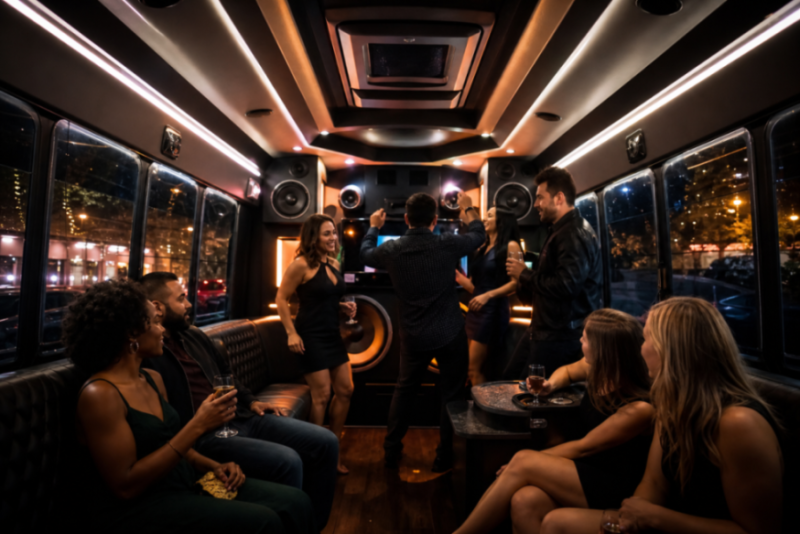
What should you check before booking a party bus with sound and lighting?
For a Charlotte party bus rental, start with the entertainment system already installed in the vehicle. Ask which sound, lighting, and phone-connection features are included in the specific bus available for your date. A generic fleet photo or the phrase “premium sound” does not tell you what your group will receive.
ILDA-VIP Services can discuss Charlotte party bus rental options for weddings, bachelor and bachelorette parties, and other group events. Share your passenger count, itinerary, and entertainment preferences so the team can assess a suitable arrangement.
Which vehicle fits your group and entertainment plans?
Choose a vehicle that accommodates every passenger in a designated seat, then compare amenities. Open floor space is not additional passenger capacity. Confirm storage for bags, decorations, or event supplies without blocking aisles or exits.
Smaller groups and quieter trips
A sedan, SUV, limousine, or Sprinter configuration may suit a group that values conversation and background music. Ask about the available vehicle’s seating, sound controls, connection options, and luggage space. Do not assume accent lighting or entertainment equipment is included in every model.
Groups looking for a party atmosphere
For a more social setting, ask to see the actual party bus interior and confirm its sound and lighting features. Photos should show the available configuration, including seating and entry steps. Ask whether the lighting can be dimmed or switched to a steady setting for guests who prefer a calmer environment.
Use our party bus planning and capacity guide to compare the vehicle arrangement with your passenger count and schedule.
What sound-system questions should you ask?
- Phone compatibility: Does the system use Bluetooth, a wired connection, or another input? Confirm what works with the phone you plan to use.
- Music controls: Who can change tracks and adjust volume? Choose one person in your group to manage the playlist.
- Connectivity: Is internet access available, or should you download your playlist before the trip?
- Charging: Are charging ports available, and should you bring your own cable?
- Included equipment: Ask whether any requested microphone, screen, or other feature is actually installed and included.
If a feature is essential to your event, request written confirmation before booking. Test the agreed connection while the vehicle is parked before departure, and ask the operator how to get help if it stops working.
What lighting features matter to passengers?
Ask for a description or demonstration of the installed lighting rather than choosing from broad labels such as “club-style.” Confirm whether color, brightness, and movement can be adjusted, and whether flashing effects can be turned off.
Tell the booking team about any guest who needs a low-stimulation setting. Confirm that the available vehicle can meet that request before reserving it. Keep steps, aisles, and exits clear, and follow the operator’s instructions for using passenger controls.
Can you bring extra speakers, lights, or decorations?
Do not assume a party bus rental permits added entertainment equipment. Ask the operator before bringing speakers, lights, extension cords, mounting hardware, or decorations. Use the installed system unless the operator has explicitly approved another arrangement.
A passenger outlet is not an invitation to connect event equipment. Vehicle modifications, wiring, and equipment mounting belong with the operator and qualified specialists. Confirm any proposed setup in advance, including responsibility for installation, removal, damage, and additional charges. For most rental groups, choosing a vehicle with suitable built-in amenities is the practical starting point.
Our party bus safety and vehicle-condition questions can help you review the broader booking details.
How do your stops and schedule affect the experience?
Share all destination addresses, reservation times, and the final return trip when requesting a quote. Allow time for boarding and traffic between stops. Confirm approved loading points with each venue; larger vehicles may need to meet your group away from the main entrance.
Follow the operator’s instructions on volume and lighting throughout the trip, including while parked. Venue access and sound restrictions may affect what is appropriate at a stop. Do not assume a stationary vehicle is exempt from the rules at that location.
For a stadium outing, review our Bank of America Stadium transportation guide and confirm current event pickup arrangements before travel.
What should your written quote include?
- The available vehicle, seated passenger limit, and luggage arrangement.
- The sound and lighting features you specifically requested.
- Start and end times, all planned stops, and the final drop-off.
- Minimum service hours, overtime rates, and whether an extension is available.
- Included fees, waiting, parking, and gratuity.
- Rules for food, drinks, decorations, cleanup, and damage.
Compare quotes using the same itinerary and passenger count. Review the booking and cancellation policies, and obtain confirmation before treating the vehicle or an amenity as reserved.
Frequently Asked Questions
Does every party bus have the same sound system and lighting?
No. Features vary by vehicle and layout. Ask for the equipment and connection options on the specific bus available for your date, and confirm any essential amenities in writing.
Can we play music from a phone?
Ask which connection methods the available vehicle supports and whether your phone is compatible. Bring any required cable and test the connection before departure while the vehicle is parked.
Can flashing lights be turned off?
Controls vary by vehicle. Tell the booking team if your group needs steady or dim lighting, and confirm that the assigned vehicle can accommodate that request before reserving it.
Can we install extra speakers or lights for the trip?
Do not bring or attach additional equipment without the operator’s explicit approval. Ask about the installed system first. Any approved installation must be arranged with the operator and qualified specialists before the trip.
Does a larger party bus always mean better entertainment?
No. Compare the actual seating layout, installed amenities, controls, and luggage space. Choose a vehicle that fits your group and itinerary rather than relying on size alone.
How do we request a party bus quote?
Provide your event date, passenger count, pickup and drop-off addresses, planned stops, service hours, and requested amenities. Ask the team to confirm availability, the vehicle arrangement, and the full booking terms.
Request a Charlotte party bus quote
Call 704-807-8300 or request a party bus transportation quote with your itinerary and sound and lighting preferences.